1.
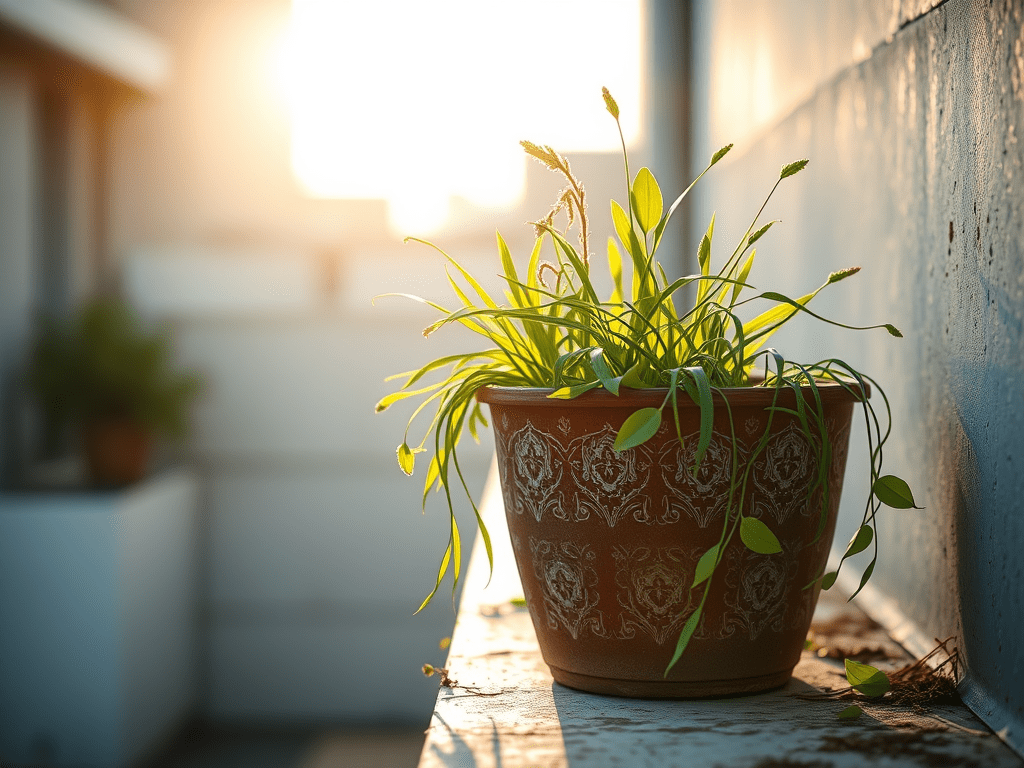
Weeds: shoots of soft green,
Unfurling in the meager loam,
Tender leaves you think you’ve seen,
Stalks raised raffishly towards heaven.
How worthy of a home
In your unused flowerpot.
They ask no care, which you haven’t got.
Instant garden.
Happy with a crack,
Half-mummified sod.
Weeds, too, must be cherished by God.
2.
Weeds: so hell-bent
They are on propagation,
Kinda like how we built a nation
After many deeds of war.
Not, that is, on careful cultivation
But on a continual supply of hopefuls
From every social stratum.
Suckers and criminals, yes; also the agile and clever.
As the country realized westward,
Dandies were exposed
As lily-livered,
The booksmart lost toes.
While others,
True of grit but without pedigree,
found purpose in the land, built log cabins
in stumpy clearings, shot varmints, became mothers,
farmers, wheelwrights, butchers, teachers, miners, widows.
The greening nation gathered the gainfully employed
Unto her breast.
Into the American landscape, previously devoid,
Went whitewashed churches
Among the larches, pines, cacti and maples.
If you slapped together two hotels, a bank and trust, saloons,
You could dub yourself a City, a -ville,
Build a jail
And schools to better the families
Riding in from somewhere,
Having learned along the way
Some Americans’ll rob you with a six-gun
And some with a feather pen
But that most enjoy fair play,
Are friendly, helpful, exult in crusty wit
Seem free of snobbery
And the original sin.
Good folk.
This is how we grew.
According to de Toqueville,
Early road-tripper from France,
The whole life of an American in those early years
was passed like a game of chance.
How much worse it would have been
without good neighbors.
3.
Weeds: every time I see a makeshift bower
I half expect that from the shoots
Will bloom some wildflowers.
I wish for something beautiful to rise
From a plant whose roots
Took hold in such forbidding soil.
But how often are you so pleasantly surprised
When you’ve spent no toil?
Time and again, those buggers,
outlast relentless sun and lack of water
Taking refuge in the shade
Of an unused trowel handle.
Yet they become less interesting.
Stems harden, lacquer like a beetle.
The petals, pistil, stamen,
when they emerge, look common
(Like someone you knew in high school
But didn’t keep in touch with
Who looks so different now)
As if to suggest that everyone has a greening season
but that weeds are weeds for a reason.
There’s a way you consider weeds—
Once you’ve made the distinction—
That’s opposed to the way you regard a flower.
Roses, pansies, calendula, etcetera, require tending.
Pruning, weeding, blood meal, soaking…
In return they bob gracefully along the picket fence
In light breezes, sparking admiration
And even, like petting a kitten, a sense of calm and happiness.
4.
Weeds, no matter what their hardiness
Or defiance of the odds might mean
Are met with indifference.
“Mama had a baby and her head popped off”
We said when we decapitated dandelions
Their necks oozing milk.
But to grab an iris or a beebom
And do the same would have seemed more like
An act of wanton destruction.
5.
Weeds: apt analogy for how they make you feel
Those velvet blooms so lush they loll.
Their progeny will bloom where they’re planted
in raised beds,
Little Mark and Marie Antoinettes.
You and me?
They have no gripe with
but they lack time, the bandwidth,
and curiosity.
Dismissed—swipe—
Even though, ‘neath our stems, we’re of the same pith.
A weed, spake Emerson,
At a packed town hall or Athenaeum,
Is a plant whose virtues have not yet been discovered.
(He’d be dismayed to learn
How few these days know from a transcendentalist
But that everyone knows the fundamentalist.)
Weeds subtly justify denial and injustice.
That the poor are milked,
As ants do aphids,
Seems inhumane unless you think of them like crabgrass
That jumped your wall,
Or as permanently shiftless,
Or can manage not to think of them at all.
6.
Weeds: grew in profusion
On the disused siding, telling their own story.
It was 1976, the Freedom Train was in town
Clackety-clacking all over the nation
To stations large and small.
For the price of admission
I imbibed the founding myth, its power and its glory,
Gawked at Washington’s copy of the Constitution
And tried to read it.
Numbly passed by MLK Jr.’s empty pulpit,
And wondered at a rock still fresh from the moon.
Automatic patriots
Outweighed the doubters then, it seemed.
You didn’t even have to be particularly well-informed.
When someone said shut up it was reflexive
To say, “Why? It’s a free country,”
And be prepared to back it up with fists.
To be a rebel was esteemed.
What the colonists
Who gave themselves to the War
had consigned to the weeds,
(along with monarchy),
Was smug faith in the superiority
Of certain opinions over others.
We were all sisters and brothers.
7.
Weeds: five decades on, I’m of an age.
Fibers are weaker, threat’ning betrayal.
Hair’s a former color.
Without glasses, words swim on the page
And hearing’s begun to fail.
Some of my notions belong in a museum.
But I’m shielded by my 1970’s breath of freedom.
There was something in the air
Amidst the inflation and embargos
A mix of struggle, will and devil-may-care
That made the Revolution seem not long ago.
The heirloom childhood
My generation lauds ad nauseum
Was as footloose as they say.
It engendered resilience, in its way.
We learned useful methods
Of denial, secrecy and evasion
—the ones at our disposal.
But against the forces that face the youth today
Our defenses were no better than our forts in the woods.
It’s every generation’s burden to worry over the next
Without crediting it enough for being elastic.
But what’s this slow-motion twister
That sucks up aspects of culture and context?
The unconventionally skilled or intelligent,
Who made this country best,
Grow up on meaner substance.
They get used to it,
Not knowing any better.
Is this deliberate?
Seems it’s possible to curb the appetite for transcendence
Without firing a shot.
At some point, without giving notice,
The Revolution’s fusillades and sacrifice grew distant.
Not too far into the recent past
We jettisoned some common decency—
The sympathetic goodhearted pang—
And are tossing after it the tools and the humility
Essential to our being.
Weeds divide the deserving from the undeserving
It’s a mistake we’ve made with confidence
From earliest colonial times:
The belief that those who prospered, God was rewarding,
The rest being unworthy, impure, or given to excess.
Concluding thus until it rhymed
Through generations of better-than-average success.
What made this country great
Were labor, smarts, broad oceans, machines,
Natural resources in abundance,
And the idea of freedom for me and thee
Which, once writ, and settled in blood,
Could not be gainsaid
No matter which side you butter your bread.
That this fair land, beautiful and vast,
By Providence was blessed
Is to be believed.
But neither she nor any of us got ahead by divine favor.
God doesn’t pick winners, or feel the need to reward them.
We won’t make it unless we’re in this together.
Thank God how lucky we are—
or lucky we have been.
Walk for a day in the mocs
Of your neighbor.
Go on, now, get your steps in.
 Suite Q
Leave a comment